

01 / Readiness
Check the composition and readiness of disciplines
If architecture, structures, and engineering (MEP) systems use different coordinates, versions, or incomplete data, a large part of the first coordination cycle is spent not on finding engineering solutions, but on preparing information.
Therefore, before starting BIM-coordination, it is worth conducting a short check of the readiness of the project. First, you need to determine which disciplines are already available: architecture, structures, heating, ventilation and air conditioning (HVAC), water and sanitation, electrical, fire and process systems.
Models do not have to be 100% complete, but they should contain enough information for spatial analysis.
Data for initial evaluation
- area and number of floors;
- design stage;
- list of disciplines;
- RVT, IFC, DWG or other file formats;
- level of readiness of models;
- planned start of construction.
Ziggurat uses such data to determine the project’s readiness for the first coordination cycle.
03 / Exchange Rules
Define the rules before starting coordination
Before starting work, it is necessary to agree not only the composition of the models, but also the order of interaction between the project participants. This is where BIM model management turns a set of files into a controlled information process.
What needs to be agreed
- which disciplines are checked among themselves;
- who is responsible for correcting comments;
- how often models are updated;
- where current files are stored;
- how changes are transmitted;
- how coordination meetings are held.
For complex projects, these rules should be formalized in a BIM implementation plan (BEP) and use a common data environment (CDE) to control models and versions.
04 / First cycle
The prepared model is the beginning of real coordination
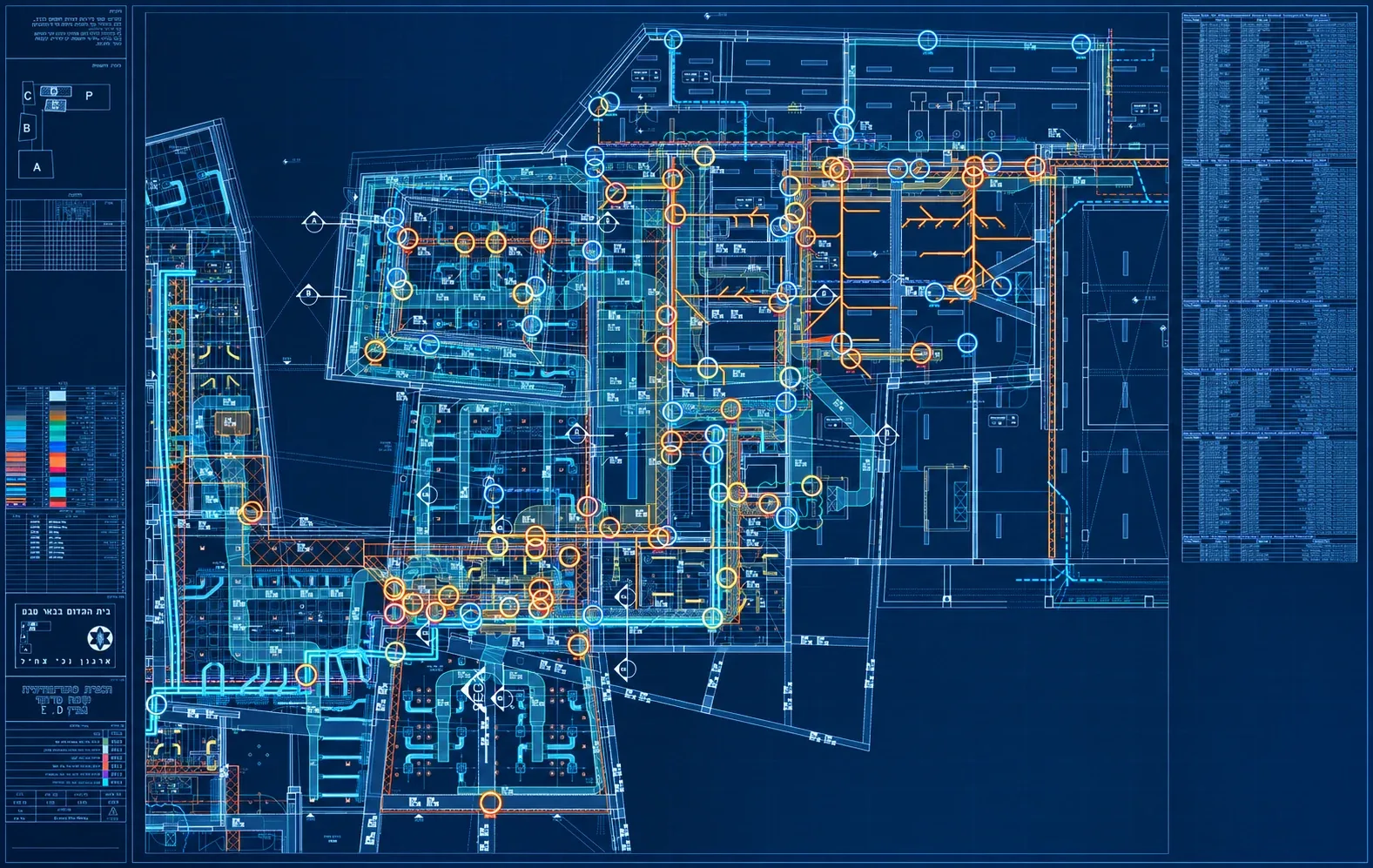
The prepared model allows the BIM team to focus on the main thing – interdisciplinary coordination. If the system detects that the pipe crosses the beam, this is not enough. You need to determine which system can be changed, whether maintenance access will remain, and whether the new solution will create another conflict.
Therefore, the result of the coordination of engineering systems should not be just a list of collisions, but an agreed engineering solution and a revalidated model.
- VerificationInput models and discipline readiness
- UnificationCoordinates, levels and current versions
- SolutionTechnically correct elimination of conflicts
- RecheckUpdated and reconciled model
05 / Practice
Ziggurat Experience
Ziggurat checks the available models, the readiness of the disciplines responsible for updating them, the regularity of transfer of changes and factors that can block coordination.
This approach allows you to move to the real coordination of systems faster and not spend the first cycles on correcting basic data problems.
Conclusion
The quality of the source data determines the result
Project preparation for BIM coordination is a consistent and clear principle:
- Current models
- Unique coordinates
- Designated responsible
- Exchange rules
- BEP and CDE
- Coordination cycle
The better the raw data is prepared, the more effectively the BIM team can focus on finding and resolving real engineering conflicts before construction begins.